Same Ranch, Different Bodies: How Horses and Dogs Get Injured in Ways You'd Never Expect
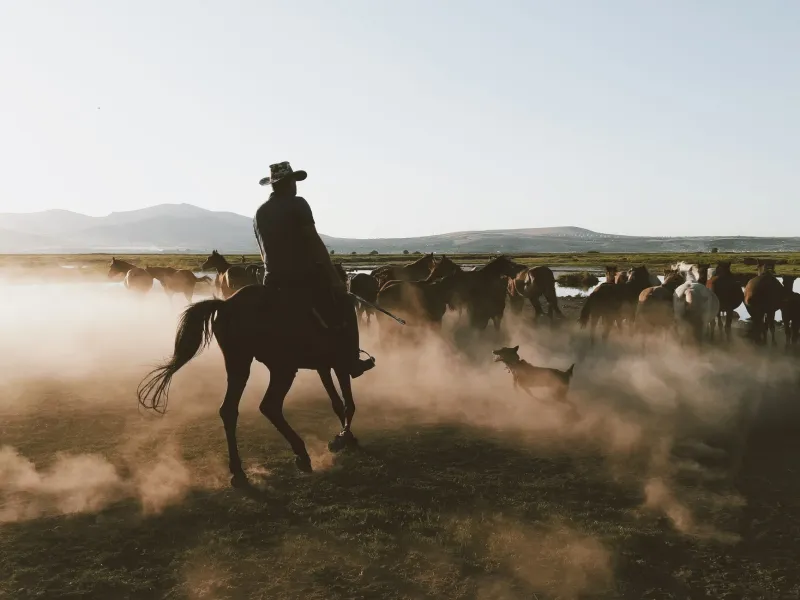
You've probably watched your dog sprint alongside your horse on a trail ride and thought, they're both doing the same thing — running. And sure, on the surface, that's true. But underneath all that fur and muscle, two very different injury stories are unfolding. The way a horse absorbs impact, generates power, and recovers from strain is fundamentally unlike how a dog does it — and if you're managing both animals on the same property without understanding those differences, you're flying a little blind.
This isn't about scaring you. It's about giving you the kind of practical knowledge that actually changes how you make decisions on the ground — whether that's adjusting a training schedule, choosing the right recovery product, or knowing when to call the vet versus when to give it a day.
Built for Different Jobs
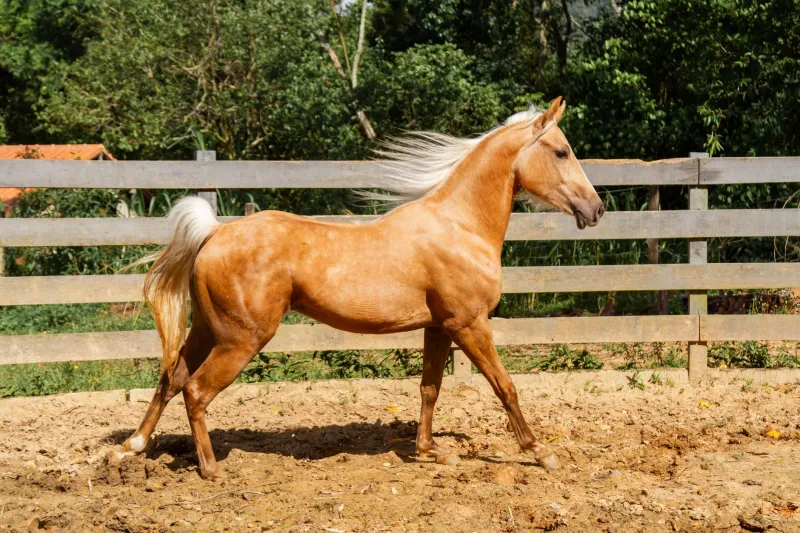
Horses evolved to cover ground — long distances at moderate speeds, carrying their own considerable weight across varied terrain. Their skeletal structure reflects that. A horse's legs are essentially long levers with relatively little soft tissue cushioning at the lower joints. The fetlock, pastern, and hoof capsule do a lot of shock absorption work, and the tendons running down the back of those legs — particularly the superficial and deep digital flexor tendons — are under enormous load with every stride.
Dogs, on the other hand, evolved as sprinters, diggers, and wrestlers. Their joints are more compact, their musculature wraps closer to the bone, and they have a much higher muscle-to-body-weight ratio in their hindquarters. A dog's spine is also far more flexible than a horse's, which is part of why a Labrador can twist mid-air to catch a frisbee without a second thought. A horse doing anything close to that kind of lateral spinal movement would be in serious trouble.
The takeaway? Horses get hurt in long, slow, cumulative ways. Dogs tend to get hurt in short, sudden, explosive ones.
Where Horses Break Down
Equine injuries are often invisible at first. Tendon damage in particular is notorious for being underestimated early on — a horse might show just a hint of heat or a subtle change in gait before a full-on soft tissue injury becomes apparent. The suspensory ligament is another common culprit, especially in performance horses or those doing repetitive work on hard ground.
Joint issues in horses also tend to develop gradually. Navicular syndrome, ringbone, and bone spavin are all degenerative conditions that build over time — often the result of conformation, footing, shoeing choices, or simple overuse. By the time a horse is noticeably off, the underlying problem may have been brewing for months.
This is why regular farrier visits, consistent footing management, and paying close attention to even minor gait changes matter so much. Early intervention is almost always cheaper and more effective than waiting until a horse is three-legged lame.
Where Dogs Break Down
Canine injuries tend to happen fast. A dog tears an ACL (technically called the cranial cruciate ligament, or CCL, in dogs) jumping off a couch. A herding dog blows a shoulder muscle cutting hard around a fence post. A hunting dog bruises a paw pad on rocky terrain after months of soft-ground work.
Dogs are also more likely to injure themselves because they don't self-regulate well. Your horse will generally slow down when something hurts. Your dog will run on a torn ligament until you physically stop him. This stoic-meets-oblivious combination is what lands so many dogs on the surgery table — not the original injury, but the continued use of an already-compromised structure.
Back injuries are another big one, especially in longer-bodied breeds like Dachshunds and Corgis. But even working dogs built for athleticism — Border Collies, Australian Shepherds, Belgian Malinois — are prone to spinal and hip issues when their exercise intensity outpaces their conditioning.
The Shared-Space Problem
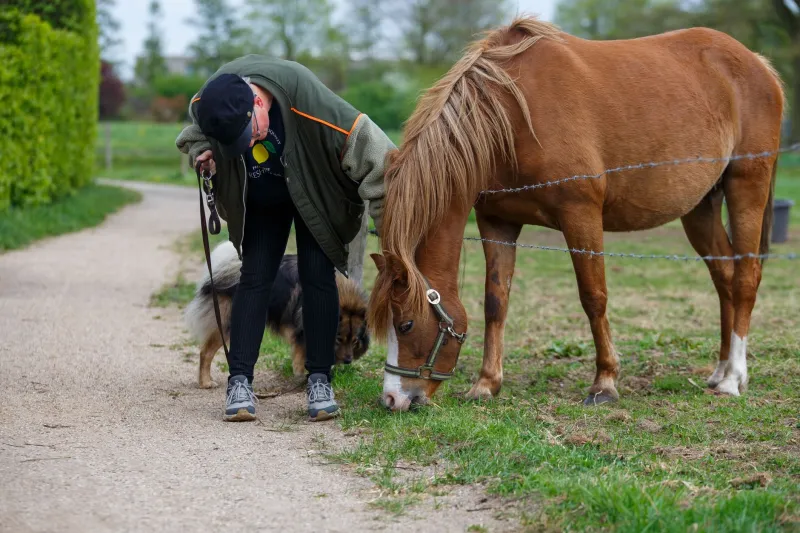
Here's where things get interesting for multi-species households. When your horse's training routine changes — say you start doing more trot sets in preparation for a show — your dog often changes right along with it. He's running alongside you in the arena. He's matching pace on trail warm-ups. He's covering the same mileage, but with a completely different body doing the work.
A 20-minute trot set is a reasonable conditioning exercise for a well-prepared horse. That same 20 minutes of sustained trotting alongside a horse is a genuinely demanding workout for a dog — especially if he's weaving, stopping, starting, and navigating footing that's been churned up by hooves. The dog's joints are taking a different kind of pounding than the horse's, and the fatigue accumulates differently too.
The reverse is also true. If your dog gets a rest day because he's been running hard all week, that doesn't mean your horse needs the same. Horses often benefit from light movement on recovery days — hand walking, easy hacking — while dogs genuinely need full rest to let soft tissue inflammation settle.
Practical Adjustments Worth Making
So what does this mean for your day-to-day routine? A few things:
Monitor your dog's workload independently of your horse's. If you're ramping up your horse's conditioning, don't assume your dog can keep pace. Limit how long your dog runs during intense training sessions, and watch for subtle signs of fatigue or soreness — slower to rise in the morning, reluctance to jump into the truck, favoring a limb.
Pay attention to footing for both animals, but for different reasons. Hard, dry ground is harder on your horse's tendons and joints. Soft, uneven ground is harder on your dog's ligaments and paw pads. In an ideal world, you're managing both — but at minimum, know which surface is the bigger risk on a given day.
Recovery looks different for each species. Cold hosing and stall rest might be exactly right for a horse with a warm tendon. For a dog with a strained muscle, controlled leash walking and anti-inflammatory support (prescribed by your vet) are more appropriate. Don't borrow recovery strategies across species.
Invest in species-appropriate supportive products. Joint supplements formulated for horses aren't interchangeable with canine joint support, and vice versa. The active ingredients, dosages, and delivery mechanisms are all different. Same goes for topical treatments, wraps, and supportive gear.
The Bottom Line
Sharing land with horses and dogs is one of the great joys of rural life in America — but it comes with the responsibility of understanding that these two animals are not just different sizes of the same thing. Their injury patterns, their pain responses, and their recovery needs are shaped by millions of years of very different evolutionary pressures.
The more you understand about how each animal's body actually works, the better you'll be at catching problems early, structuring exercise appropriately, and making smart choices about the products and care routines that keep both of them healthy. That's not just good animal stewardship — it's the kind of thing that saves you real money and real heartache over the long haul.