Worms, Ticks, and the Gaps Between: Why Your Horse and Dog Need Completely Different Parasite Plans
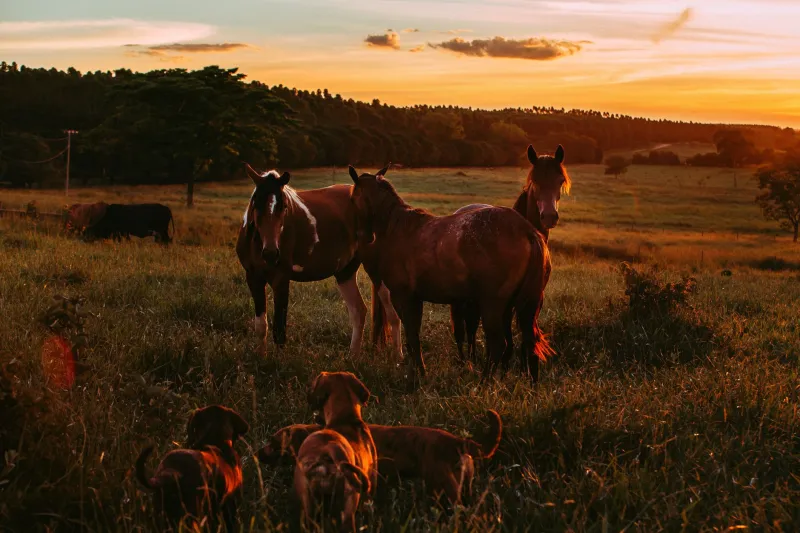
Ask most horse and dog owners about their deworming routine and you'll get one of two answers. Either they're on top of it — rotating products on a rigid schedule they've followed for years — or they're quietly hoping things sort themselves out. Neither approach is quite right, and for very different reasons depending on which animal you're talking about.
The truth is, internal and external parasites are one of the most consequential health topics in multi-species households, and also one of the least openly discussed. Nobody loves talking about worms at the dinner table. But if you share your property with a horse and a dog, understanding where their parasite risks diverge — and where they occasionally intersect — could save you a vet bill, a hospitalization, or worse.
Your Horse's Parasite Landscape Is a Whole Different World
Horses are walking parasite magnets, and the primary culprits are internal. Strongyles — both large and small — are the most clinically significant, with small strongyles (cyathostomins) now considered the bigger threat thanks to widespread resistance to older dewormers. These larvae can encyst in the gut wall for months, emerging in large numbers and causing serious damage, sometimes without obvious symptoms until the situation is critical.
Ascarids (roundworms) are a major concern in young horses, while tapeworms require a specific drug — praziquantel — that's absent from many basic deworming protocols. Bots add another layer: the larvae of botflies that horses ingest while grooming, which then burrow into the stomach lining.
The old advice to rotate dewormers on a fixed quarterly calendar has largely been abandoned by equine veterinarians in favor of targeted selective treatment (TST). This approach uses fecal egg counts (FECs) to determine which horses are actually shedding significant parasite loads — because not all horses shed equally. High shedders need more frequent treatment. Low shedders may only need two treatments a year. Treating every horse the same way accelerates drug resistance without improving outcomes.
Seasonally, horses in most of the continental US face heightened risk in spring and fall when larval development on pasture is most active. In warmer southern states, that window stretches considerably. In colder northern climates, a late-fall treatment targeting encysted small strongyle larvae is often recommended before the ground freezes.
Dogs Face an Entirely Different Threat Profile
Your dog is not a small horse, and the parasites that concern your vet aren't the ones keeping your farrier up at night. For dogs in the US, the big internal threats are heartworm, intestinal roundworms, hookworms, whipworms, and tapeworms — with heartworm being uniquely deadly and uniquely preventable.
Heartworm disease, transmitted by mosquitoes, is present in all 50 states but reaches its highest prevalence in the southeastern US, the Gulf Coast, and along the Mississippi River. The American Heartworm Society recommends year-round prevention for all dogs regardless of geography, and that guidance has solid science behind it. A single missed month during a warm snap in February has given dogs heartworm before.
Intestinal parasites in dogs are largely managed through monthly preventatives that cover multiple species simultaneously — most heartworm prevention products also address roundworms and hookworms. Tapeworms require separate treatment (usually praziquantel, interestingly the same drug used for horse tapeworms) and are often contracted through flea ingestion, which means flea control and tapeworm prevention are directly linked.
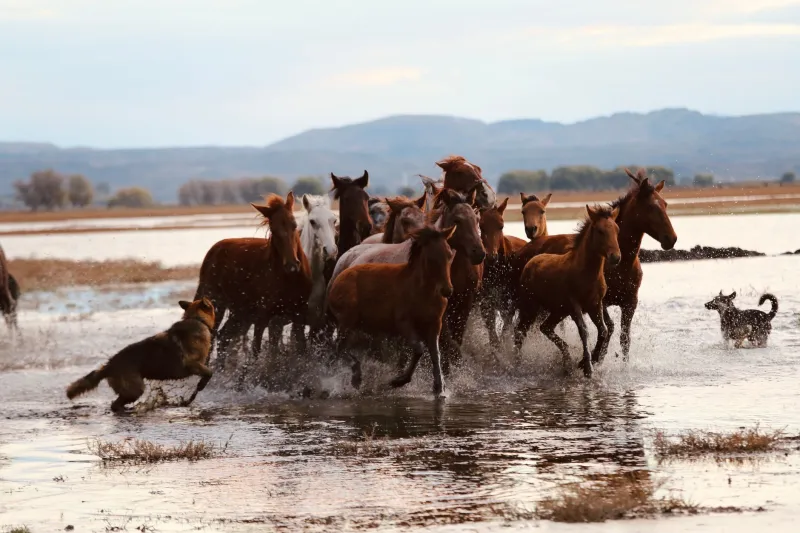
External parasites are where dogs and horses share some real estate. Ticks are a threat to both species, and if your dog is roaming the same pasture as your horse, they're both at risk for tick-borne illnesses — Lyme disease, anaplasmosis, ehrlichiosis. Horses don't have a vaccine for most of these; dogs do have a Lyme vaccine, and it's worth discussing with your vet if you're in a high-risk area.
Where the Two Species Actually Overlap — and Where It Gets Complicated
Here's the part that catches people off guard: some of the products safe for horses are toxic to dogs, and vice versa. Ivermectin is the most important example. Used correctly, it's a cornerstone of equine deworming. But certain dog breeds — particularly collies, Australian shepherds, and other herding breeds — carry an MDR1 (ABCB1) gene mutation that makes them dangerously sensitive to ivermectin. A dog that rolls in or ingests horse manure from a recently treated horse can be exposed to enough residual ivermectin to trigger neurological symptoms.
This isn't a theoretical risk. It's documented. If you have herding breeds and you deworm horses, talk to your vet about timing, manure management, and whether your dog should be tested for the MDR1 mutation.
On the flip side, permethrin-based tick and fly sprays are commonly used on horses and are highly effective. They are also acutely toxic to cats and potentially harmful to dogs in concentrated form. Read labels. Every time.
Building a Prevention Calendar That Actually Works
The goal isn't to treat more — it's to treat smarter. Here's a practical framework for thinking about the year across both species.
For your horse:
- Work with your equine vet to establish fecal egg counts in spring and fall
- Categorize horses as low, moderate, or high shedders and treat accordingly
- Include a tapeworm-targeting product (praziquantel) at least once annually
- Consider a larvicidal dose of fenbendazole or moxidectin in fall for encysted small strongyles in appropriate horses
- Track which products you've used and rotate drug classes to slow resistance
For your dog:
- Keep heartworm prevention current year-round, no exceptions
- Use a broad-spectrum monthly preventative that covers intestinal parasites
- Add flea and tick prevention appropriate to your region and lifestyle — dogs that trail ride or work pastures need robust tick coverage
- Run an annual fecal float at your regular wellness visit
- Ask about the Lyme vaccine if you're in a tick-heavy area
For the property:
- Regular manure removal from pastures reduces strongyle larval populations significantly
- Don't compost horse manure in areas accessible to dogs until it's fully broken down
- Mow pasture edges and manage tall grass to reduce tick habitat
The Conversation Worth Having With Your Vet
One of the most useful things you can do this year is sit down — separately — with your equine vet and your small animal vet and actually map out a parasite prevention calendar. Bring your product history. Ask about resistance patterns in your region. Ask whether your dog's breed warrants MDR1 testing. Ask whether your horse is being overtreated or undertreated based on actual fecal data.
Parasite control has gotten more nuanced over the last decade, not less. The old rotate-and-hope approach worked reasonably well when drug resistance wasn't a factor. It doesn't work as well now. The good news is that targeted, evidence-based protocols are better for your animals and, often, better for your budget — because you're spending on treatment that's actually needed rather than products that are simply reassuring to buy.
At Hoof & Hound, we carry deworming and prevention supplies for both horses and dogs — but the best product is always the one your vet recommends based on your specific animals, your region, and your land. Start there, then shop accordingly.