Stressed Animals, Stretched Budgets: The Real Price of Ignoring Anxiety in Your Horse and Dog

You've probably heard the phrase "stress kills." We usually say it about people hunched over laptops at midnight, but it applies just as honestly to the horse pacing the fence line and the dog who's eaten through another baseboard. Chronic anxiety isn't just an inconvenience — it's a slow, expensive leak in the hull of your animals' health. And if you're managing both a horse and a dog on the same property, you may be dealing with two leaky hulls at once.
Let's talk about what's actually happening inside a chronically stressed animal, why it costs you more than you'd expect, and what you can realistically do about it without turning your barn into a spa retreat.
What Stress Does to the Body — It's Not Pretty
When a horse or dog perceives a threat — real, imagined, or just relentlessly repeated — their body floods with cortisol and adrenaline. That's the fight-or-flight response doing its job. The problem starts when the threat never really goes away. New barn neighbor, inconsistent feeding schedule, a dog left alone for ten hours a day — these aren't acute emergencies, but the nervous system treats them like one, over and over.
In horses, chronic cortisol elevation is directly linked to a compromised immune response, making them more susceptible to respiratory infections, skin conditions, and even laminitis. The gut takes a serious hit too — stress disrupts the delicate microbial balance in the equine digestive tract, setting the stage for colic, one of the most expensive emergencies a horse owner can face. Ulcers are another big one. Studies suggest that a significant percentage of performance horses — and even many pasture horses — deal with gastric ulcers, and stress is a primary driver.
Dogs aren't off the hook either. Chronically anxious dogs show elevated cortisol levels that suppress immune function, increase inflammation, and can accelerate the progression of conditions like allergies, skin infections, and even heart disease over time. Behaviorally, stress manifests as destructive chewing, excessive barking, house-training regression, and aggression — all things that either cost money to fix or create liability you'd rather not think about.
The Compound Effect: When Stress Becomes a Spiral
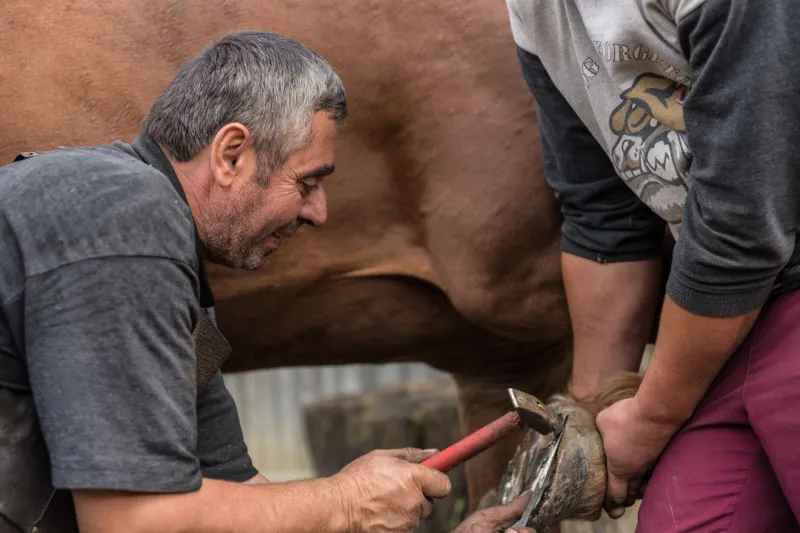
Here's where it gets really expensive. Stress doesn't just cause one problem — it tends to compound. A horse with ulcers becomes more reactive and harder to handle, which means more training time, potentially more farrier callouts for a horse that won't stand still, and a higher risk of injury to both animal and handler. A dog with anxiety-driven digestive upset visits the vet more often, gets prescribed medications, and may develop food sensitivities that push you toward pricier specialty diets.
Behavioral fallout from stress is its own financial category. Chewed fencing, damaged tack, destroyed furniture, and stall wood that looks like a beaver got loose — these are direct dollar losses. And that's before you factor in the time cost of managing an animal that's perpetually on edge.
The insidious part is that many owners chalk these things up to personality or breed quirks rather than recognizing them as stress signals. "He's just a nervous horse" or "She's always been anxious" can become the kind of shrug that quietly drains your budget year after year.
Environment Is Everything — and It's Often Free to Fix
One of the most powerful stress-reduction tools available to you doesn't come in a bottle. It comes from taking a hard look at your animals' daily environment and identifying what's generating unnecessary tension.
For horses, consistency is everything. Feeding at the same times each day, maintaining a predictable turnout schedule, and minimizing sudden changes in herd dynamics can significantly reduce baseline cortisol. Good ventilation in the stall, adequate forage (hay keeps the equine gut moving and the mind occupied), and visual access to other horses all contribute to a calmer animal. If your horse is stalled for long stretches, enrichment matters — slow feeders, safe toys, and even just a window with a view can lower the anxiety dial.
For dogs, the calculus is similar but different in its specifics. Dogs thrive on routine, adequate exercise, and a predictable social environment. A dog who's uncertain about when their owner is coming home, who doesn't get enough physical output for their breed, or who lacks a defined role in the household is a dog running a cortisol tab. Crate training done correctly — not as punishment but as a genuine safe space — can dramatically reduce ambient anxiety in dogs who struggle with open-ended freedom.
Companionship also matters more than most people give it credit for. Horses are herd animals; isolation is genuinely stressful for them. Dogs are pack animals with the same basic need. On a multi-species property, the relationship between your horse and dog can actually serve as a form of mutual stress relief when managed well — but that's a topic for another day.
Strategic Spending: Where Stress-Relief Products Actually Pay Off
There's a real market for stress-relief products for both horses and dogs, and some of them are genuinely worth the investment when used as part of a broader management strategy — not as a substitute for one.
For horses, magnesium supplementation is widely used to support nervous system function, and there's reasonable evidence it helps genuinely magnesium-deficient horses with reactivity. Calming supplements containing ingredients like valerian, tryptophan, or ashwagandha have their advocates, though results vary. The key is treating them as support tools, not solutions.
For dogs, there's a growing category of calming aids — from pheromone diffusers and anxiety wraps to hemp-based chews and probiotic blends designed to support the gut-brain axis. Again, these work best alongside environmental and behavioral management, not instead of it.
Quality matters here. A cheap supplement with poor bioavailability isn't saving you money — it's just giving you the feeling of doing something. Investing in well-formulated products from reputable brands, used consistently and appropriately, tends to deliver better outcomes than cycling through bargain options that don't move the needle.
Stress Management Is Preventive Care — Full Stop
The framing shift that makes the most difference for most owners is this: managing your animals' stress isn't a luxury or an indulgence. It's preventive medicine with a measurable return on investment. Every colic episode you avoid, every vet visit for a stress-triggered skin flare you don't have, every piece of fencing that doesn't need replacing — that's money that stayed in your pocket.
It also just makes daily life better. Calmer animals are easier to handle, safer to work with, and more enjoyable to be around. That's not a small thing when you're out there in the dark in January, trying to get a horse into a trailer or a dog to settle down before you've had your coffee.
Paying attention to your animals' stress levels isn't soft — it's smart. And at Hoof & Hound, we'd argue it's one of the most practical things you can do for the animals you've invested in and the property you're running.