Your Animals Are Smelling Trouble Before You Can See It — Here's What to Do About That
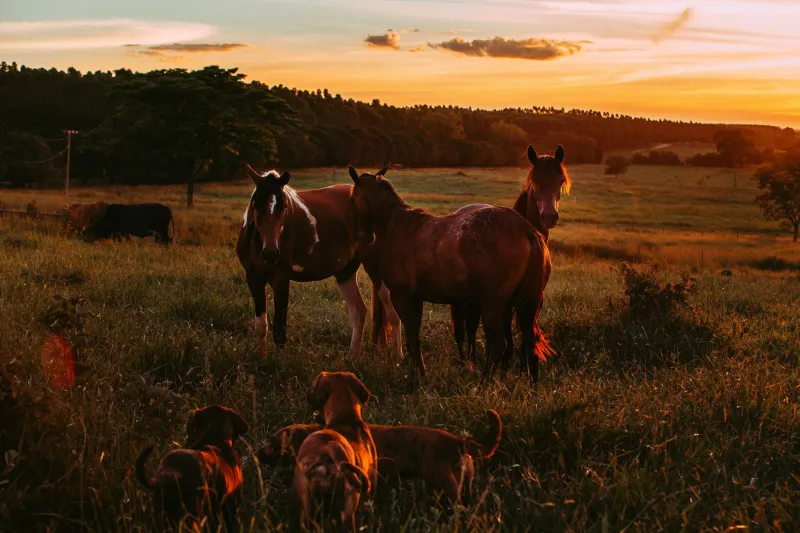
There's a moment most horse and dog owners have experienced but rarely talk about. Your dog starts circling a patch of the back pasture like something's wrong. Your horse won't walk past a particular fence post without throwing his head. You look. You don't see anything. So you move on.
Here's the thing: they probably weren't wrong.
Horses and dogs don't experience the world the way we do. Their primary interface with the environment is smell — and both species are operating with olfactory hardware that puts human perception to shame. A dog's nose contains somewhere between 150 million and 300 million scent receptors. A horse isn't far behind, with a highly developed vomeronasal organ that helps them detect chemical signals in the environment. When either animal starts acting weird in a specific spot, there's almost always a reason rooted in what they're sensing, not what they're seeing.
Learning to read that behavior as useful information — rather than just quirky animal stuff — can turn your horses and dogs into the most reliable property inspectors you've ever had.
Why Their Noses Know More Than You Think
Let's start with dogs, since most people are at least vaguely aware of what their snouts can do. A dog can detect certain compounds at concentrations as low as one part per trillion. That's not a typo. This is why dogs are used to sniff out everything from narcotics to cancer cells in clinical trials. On your property, that same sensitivity means your dog can pick up on things like gas leaks from buried lines, decomposing organic matter beneath the soil, chemical residue from pest treatments, and yes — toxic plants — long before you'd ever notice a problem.
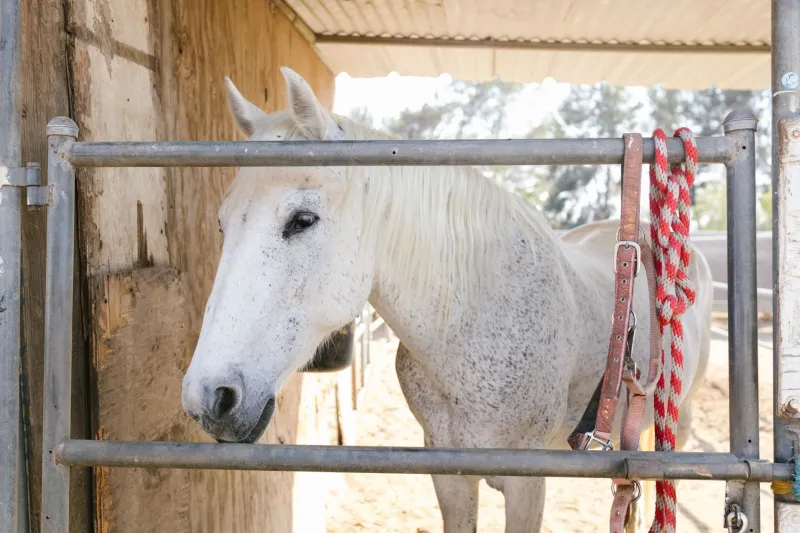
Horses bring a different but equally impressive skill set. They're prey animals, which means evolution spent millions of years sharpening their ability to detect threats. Their sense of smell is closely tied to survival instinct, and they use it constantly to assess whether a space is safe. A horse that's snorting repeatedly at a water trough or refusing to graze a section of pasture they usually love isn't being difficult. They may be detecting something genuinely wrong — a chemical contaminant, a dead animal nearby, or a plant that doesn't belong.
The Behaviors Worth Paying Attention To
Not every spook or avoidance behavior signals a real hazard, of course. But patterns matter. Here are some specific signals worth taking seriously:
Repeated avoidance of a specific area. If your dog won't go near a corner of the yard, or your horse consistently refuses to graze a section of pasture, mark it mentally. If it happens more than once or twice, it's worth investigating on foot.
Excessive sniffing at ground level near water sources. Both species will show intense interest in water that smells off — from algae blooms producing toxins to runoff contaminating a trough or pond. A horse that drinks from one spot but refuses another in the same trough is telling you something.
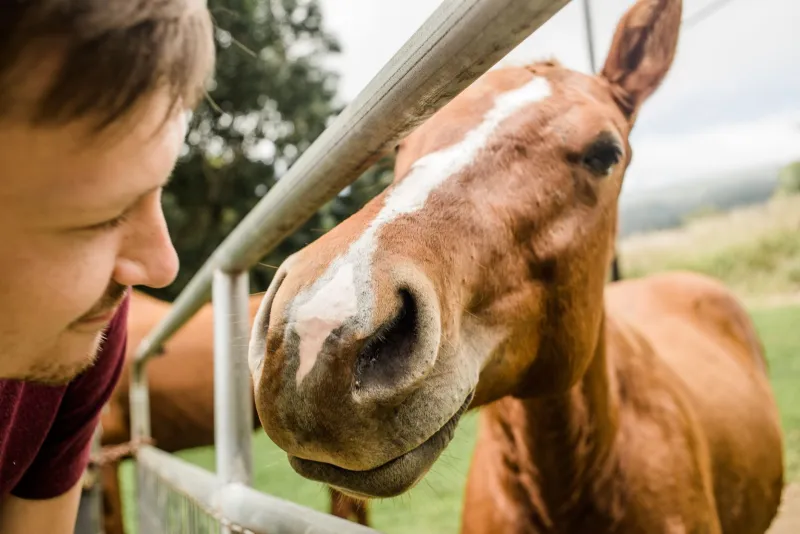
Lip curling in horses (the Flehmen response). This isn't just a funny face. When a horse curls their upper lip and inhales, they're directing scent molecules to the vomeronasal organ for deeper analysis. It often happens in response to something unusual — unfamiliar animals, chemical smells, or something in the feed.
Dogs that dig obsessively in one spot. This can mean a number of things, but if your dog is fixated on a particular location and won't let it go, consider what might be underground — buried materials, old chemical storage, decomposition.
Sneezing or pawing at the nose. Irritants in the air, mold in hay, or dust from a particular area can trigger this. If it's happening consistently in the same location, the location is the clue.
Common Property Hazards They're Probably Flagging
Once you start paying attention to where your animals are acting strange, you'll want to know what you're actually looking for. Here are the most common culprits on US ranches and rural properties:
Toxic plants. This is a big one. Across the American West and South especially, pastures can harbor plants like ragwort, nightshade, yew, oleander, and various species of milkweed. Horses tend to avoid these instinctively, but stressed or hungry animals may not. Dogs, being less discerning eaters, are at higher risk. If your animals are avoiding a patch of vegetation, pull out a regional plant guide or contact your county extension office and identify what's growing there.
Old buried debris or chemical storage. Farms and ranches change hands. What's under your soil might include old fuel tanks, pesticide containers, or treated lumber scraps. Dogs especially will dig toward these. If you're on a property with any history, it's worth knowing what came before you.
Mold in feed or hay. This is one of the most underappreciated hazards in the barn. Horses and dogs both have the ability to detect mold compounds before you'd see visible growth. A horse that suddenly backs away from a hay bale it normally eats without hesitation deserves a closer look at that bale — and the storage conditions around it.
Standing water and algae. Blue-green algae (cyanobacteria) can produce toxins that are deadly to both horses and dogs, and it's a growing problem in warm-weather months across much of the US. If your animals are avoiding a pond or water source they've used for years, check it visually for surface blooms and consider having it tested.
Structural issues in fencing and buildings. This one surprises people, but horses in particular will often show reluctance to enter a space that has structural instability — rotting wood, compromised posts, even subtle shifts in a barn floor. Their sensitivity to vibration and air movement means they may detect something wrong before you see it.
Building a Smarter Inspection Habit
None of this means you should outsource your property management entirely to your animals. But it does mean you should treat their behavior as data.
A practical habit: walk your property regularly with your dog off-leash and pay attention to where they linger, dig, or avoid. Do a monthly visual sweep of your pasture for plants that don't belong, and cross-reference anything suspicious. When your horse acts odd in a specific location, don't just redirect — note it, return to that spot, and give it a proper look.
And invest in the tools that support their ability to do this job well. Good grooming keeps their sensory organs clear — matted coats, dirty ears, and clogged nostrils reduce their sensitivity. Quality nutrition supports overall neurological function. And when something genuinely seems off, call your vet and your local agricultural extension agent before assuming it's nothing.
Your animals aren't being dramatic. They're working. The least you can do is listen.