Better Together: How Horses and Dogs Make Each Other Healthier — and Your Wallet Happier

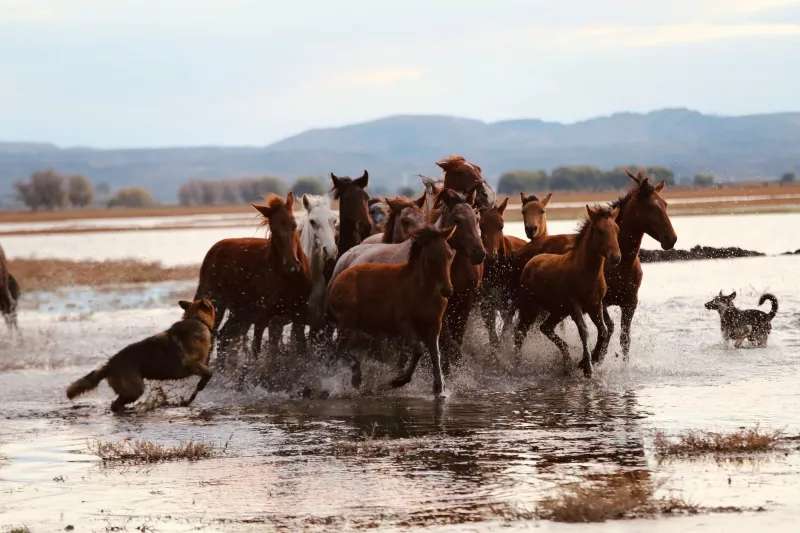
If you've ever watched your dog sprint figure-eights around the pasture while your horse tracks every move with curious ears, you've witnessed something that goes deeper than entertainment. That interaction — messy, loud, and completely unscripted — is doing both animals a quiet kind of good. And according to a growing body of research, it might be doing your finances a favor too.
The idea that multi-species households reduce stress and veterinary costs isn't just barn talk. It's showing up in behavioral studies, in conversations with equine veterinarians, and in the lived experience of horse-and-dog owners across the country. So let's dig into what's actually happening when your hoof and hound crew shares the same acreage.
The Stress Chemistry Nobody Talks About
Here's something that might surprise you: both horses and dogs are profoundly social creatures, and isolation — even partial isolation — triggers measurable stress responses in each species. Elevated cortisol levels in horses have been linked to everything from ulcers and colic susceptibility to stereotypic behaviors like cribbing and weaving. In dogs, chronic low-grade stress shows up as destructive chewing, excessive barking, and anxiety-related digestive issues.
What researchers have found interesting is that cross-species companionship can buffer these stress responses in ways that same-species pairing doesn't always replicate. A 2020 study published in Applied Animal Behaviour Science noted that horses housed in environments with varied social stimuli — including other species — showed lower baseline cortisol levels compared to horses in more isolated or monotonous environments. Dogs, similarly, benefit from the sensory richness of living near large animals: the sounds, smells, and movement patterns of horses provide a kind of environmental complexity that keeps canine brains engaged without overwhelming them.
Dr. Megan Cartwright, a veterinary behaviorist based in Colorado who works with both equine and small animal clients, puts it plainly: "When I see a dog that lives with horses, I rarely see the kind of compulsive anxiety behaviors that I encounter in suburban dogs left alone all day. The horse becomes an anchor — something to watch, something to orient to. That matters neurologically."
Movement Is Medicine for Both Species
One of the most underappreciated benefits of the horse-dog household is what it does for daily activity levels — for both animals, and honestly, for you too.
Dogs that live on properties with horses tend to rack up significantly more daily movement than their city-dwelling counterparts. They follow barn routines, patrol fence lines, investigate new smells, and engage in spontaneous play that no structured walk can fully replicate. That increased activity translates directly into better cardiovascular health, healthier weight maintenance, and stronger joints — all factors that reduce long-term veterinary costs.
For horses, the presence of an energetic dog can encourage movement in ways that are surprisingly beneficial. A horse that might otherwise stand listlessly in a corner of the paddock will often follow, trot toward, or engage with a dog that's moving through the pasture. This low-intensity movement throughout the day supports digestive motility — which is genuinely significant when you consider that impaction colic is one of the most common and costly equine emergencies in the US.
"Natural, consistent movement is one of the best things a horse can have," says Dr. James Holloway, an equine veterinarian practicing in central Texas. "I've had clients tell me their horses are more active since they got a dog, and I believe it. Anything that keeps a horse moving throughout the day is going to support gut health."
Behavioral Benefits That Show Up at the Vet's Office
Behavioral problems are expensive. That's not an opinion — it's a financial reality that veterinarians and pet owners deal with constantly. Horses that develop stereotypies from boredom or anxiety require management interventions, sometimes including medications or specialized equipment. Dogs with separation anxiety or destructive behaviors rack up costs in damaged property, training consultations, and in some cases, pharmaceutical support.
Multi-species households tend to see fewer of these problems develop in the first place. The reason isn't complicated: animals that are mentally stimulated and socially engaged simply have less capacity for boredom-driven dysfunction.
A dog that spends its afternoon watching a horse eat hay, investigating manure piles (yes, that's enrichment — gross but true), and responding to the ambient sounds of barn life is a dog whose brain is occupied in a healthy way. A horse that has a canine companion trotting nearby during turnout is a horse that's less likely to pace the fence line out of loneliness.
This isn't to say that multi-species cohabitation eliminates behavioral issues entirely — introductions matter, personalities matter, and management still plays a huge role. But the baseline conditions for good mental health are genuinely stronger in these environments.
The Real Numbers: What You Might Actually Save
Let's talk dollars, because that's part of why you're reading this.
The American Pet Products Association estimates that US pet owners spend billions annually on veterinary care, with behavioral consultations, anxiety medications, and stress-related illness accounting for a significant and growing portion of that spend. Meanwhile, conditions like equine gastric ulcers — strongly associated with stress and limited social contact — can cost anywhere from $1,500 to $3,000 to diagnose and treat per episode.
While no one is suggesting that getting a dog will cure your horse's ulcers or that buying a horse will fix your dog's separation anxiety, the aggregate effect of reduced stress, increased movement, and richer social environments does appear to lower the frequency of these costly issues in multi-species households. Owners who manage their animals well in these settings often report fewer emergency vet calls and more stable overall health across both species.
The savings aren't always dramatic or immediate — but over a decade of ownership, fewer behavioral consults, less colic intervention, and healthier body weights add up to real money.
Making It Work Day to Day
None of this happens automatically. The benefits of a horse-and-dog household are real, but they depend on thoughtful management. Safe introductions, appropriate fencing, and clear routines are non-negotiable. A dog that harasses horses isn't providing enrichment — it's creating a liability. And a horse that's genuinely afraid of dogs won't experience the calming effects of canine companionship.
The sweet spot is a relationship built gradually, with both animals given the space to set the pace. Once that foundation is in place, though, the dynamic that develops tends to be genuinely self-sustaining — and genuinely good for everyone involved, including the human footing the vet bills.
At Hoof & Hound, we've always believed that horses and dogs bring out the best in each other. Turns out, the science is starting to agree.