First Impressions at the Fence Line: How to Introduce Your Dog to Your Horse the Right Way
So you've got a horse, and now there's a dog in the picture. Maybe you just adopted a rescue pup, or maybe a friend's dog is joining your property permanently. Either way, you're probably wondering the same thing every new multi-species owner wonders: How do I do this without someone getting hurt?
The good news is that horses and dogs can absolutely coexist — and even become genuine companions. The not-so-good news is that a botched introduction can create lasting fear and behavioral problems that take months to undo. The fence line is where it all begins, and what happens in those first few meetings matters more than most people realize.
Here's how to make it go smoothly.
Before You Ever Let Them Near Each Other
Prep work isn't optional — it's the whole game. Before your dog and horse share the same airspace, there are a few boxes you need to check.
Know your dog's baseline. Has your dog been around large animals before? Does she spook easily, or is she the type to bolt toward anything that moves? A dog with a high prey drive or zero impulse control is going to need a slower, more structured approach than a calm, well-socialized adult dog. Be honest with yourself here.
Know your horse's history, too. Some horses have had bad experiences with dogs — maybe a neighbor's dog chased them once, or they grew up in an environment where dogs were rare. Ask your vet or previous owner what you're working with. A horse that's already nervous around dogs will need extra patience on your end.
Get the basics down first. Your dog should reliably respond to "sit," "stay," and "come" before you attempt any kind of introduction. If your pup isn't there yet, spend a few weeks on obedience fundamentals. It's not a delay — it's an investment.
Let them smell each other from a distance. Before the face-to-face moment, try placing a blanket or piece of tack from your horse's stall in an area where your dog can sniff it freely. Do the reverse too — let your horse investigate something that smells like the dog. This kind of scent swapping lowers the novelty factor and makes the real meeting feel a little less alarming.
The First Meeting: Keep It Short, Keep It Controlled
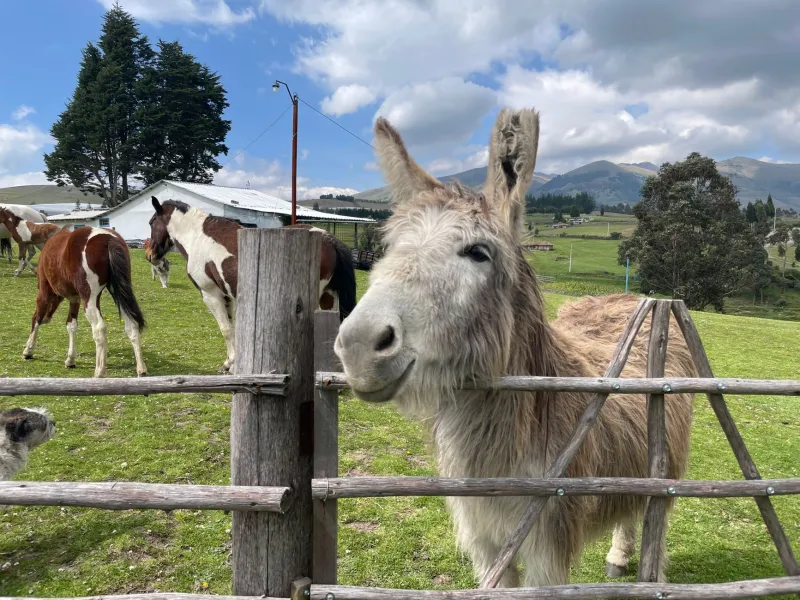
Day one is not the day for a free-range barn adventure. The first introduction should happen at the fence — your horse on one side, your dog on leash on the other. That fence is doing a lot of work, and you want it there.
Bring your dog to the fence on a short leash and let your horse approach at his own pace. Don't force it. If your horse walks up curious and calm, that's a great sign. If he pins his ears, stomps, or retreats to the far end of the pasture, give him space and try again another day.
Watch your dog's body language just as closely. A dog that's crouching low, stiff-tailed, or laser-focused on the horse with that predatory stillness? Redirect her attention immediately. A dog that's wagging, loose in the body, and looks back at you for reassurance? You're in good shape.
Keep this first session to five or ten minutes, max. End on a calm note, reward both animals, and walk away. Shorter and positive beats longer and chaotic every single time.
Reading the Room: Body Language You Can't Afford to Miss
The biggest mistake new multi-species owners make is misreading their animals' signals. Here's a quick cheat sheet:
Horse warning signs:
- Ears pinned flat against the head
- Swishing tail aggressively
- Stomping or pawing
- Turning hindquarters toward the dog (a kick is coming)
- Wide eyes showing white
Dog warning signs:
- Stiff, rigid posture
- Hard stare with unblinking focus
- Low growl or raised hackles
- Crouching into a stalking position
- Lunging or pulling hard toward the horse
If you see any of these, calmly separate the animals and give everyone a break. There's no shame in going slower. Rushing is how accidents happen.
Positive signals to look for:
- Horse drops his head, licks and chews, or goes back to grazing
- Dog sniffs, glances away, and relaxes her posture
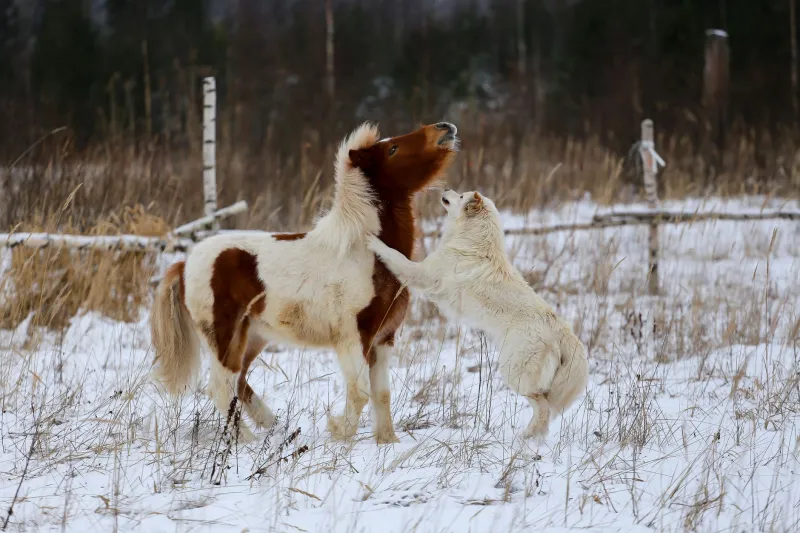
- Mutual curiosity without tension — both animals checking each other out without fixating
Graduated Access: Moving from the Fence to the Barn
Once your dog and horse have had several calm fence-line interactions over the course of a week or two, you can start thinking about closer contact. The key word here is graduated — you're building trust in layers, not skipping to the end.
Step one: Bring the dog into the barn or paddock area on leash while the horse is in his stall or on the other side of a gate. Let the dog explore the environment and get used to the smells and sounds without direct access.
Step two: Allow a nose-to-nose meeting through a stall door or gate. Keep your dog on leash. Let the horse sniff if he chooses, but don't push his nose toward the dog.
Step three: With your dog on a long line (not off-leash), allow both animals to share a space together with you actively supervising. Stay calm yourself — animals pick up on your energy faster than you'd think.
Step four: Only when both animals are consistently relaxed should you consider any off-leash time, and even then, do it in an enclosed area where you can intervene quickly.
This whole process might take a few weeks or a few months depending on your specific animals. That's completely normal.
Troubleshooting Common Hiccups
"My dog keeps chasing my horse." This is a hard stop. Chasing is dangerous for your horse and can get your dog seriously injured. Go back to leash-only interactions and work on solid recall and impulse control. Consider working with a professional trainer who has livestock experience.
"My horse won't come near the dog at all." Don't force it. Keep doing calm, short sessions at a distance your horse finds comfortable. Gradually decrease that distance over time. Patience is your best tool here.
"They seemed fine, then suddenly things went sideways." This happens. Animals have bad days just like people do. A horse that's in pain, a dog that didn't sleep well, a weird smell on the wind — any of it can shift the dynamic temporarily. Don't overreact, but do take it as a reminder that supervision is always part of the deal.
The Long Game
Once your dog and horse have built a solid foundation of trust, life on a multi-species property gets a whole lot easier — and honestly, a lot more fun. There's something genuinely special about watching a dog trot alongside a horse on a trail ride or seeing them touch noses over a stall door like old friends.
But that kind of relationship is earned, not assumed. The time you put in now — the careful introductions, the reading of body language, the slow and steady progression — is what makes it possible.
At Hoof & Hound, we're big believers in setting both your animals up for success from day one. Whether you're stocking up on training gear for your pup or looking for supplies to keep your barn running smoothly, we've got you covered. Because when the hoof and the hound get along, everybody wins.