Hay vs. Kibble: Busting the Biggest Feeding Myths for Horse and Dog Owners
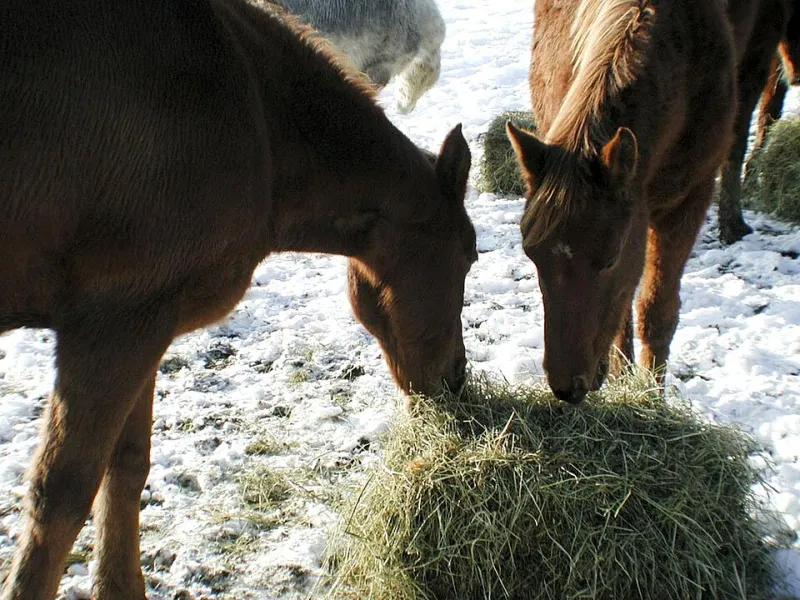
Photo: Unknown authorUnknown author, Public domain, via Wikimedia Commons
The Feeding Rabbit Hole Is Real
Ask ten horse owners how to feed a horse, and you'll get twelve different opinions. Same goes for dog owners. The internet is absolutely packed with confident advice about what your animals should — and absolutely should not — eat, and a lot of it contradicts itself spectacularly. Meanwhile, your horse is looking at you over the fence and your dog is staring at their bowl, and you're just trying to do right by both of them.
Here's the thing: horses and dogs are about as nutritionally different as two animals can be, and treating their dietary needs as interchangeable — or even vaguely similar — can lead to real problems. Let's break down some of the most persistent myths floating around the feed room and the dog food aisle, and talk about what current research actually says.
Myth #1: "Natural" Automatically Means Better
This one shows up constantly in both the equine and canine worlds. The logic sounds reasonable: animals evolved eating certain things, so the closer we get to that, the healthier they'll be. But it's not that simple.
For horses, the "natural" argument often gets applied to grazing practices — specifically the idea that horses should have unlimited pasture access because that's how they lived in the wild. In reality, modern domesticated horses face very different conditions than their wild ancestors. Lush, high-sugar pasture grasses can trigger insulin dysregulation and laminitis in horses that are metabolically susceptible, particularly certain breeds like Morgans, Arabians, and easy-keeper warmbloods. "Natural" pasture access, without management, can genuinely harm some horses.
For dogs, the "natural" argument fuels the raw food movement, which positions raw meat diets as the evolutionary ideal. While raw diets can work well for some dogs under careful management, the American Veterinary Medical Association (AVMA) has flagged real concerns around bacterial contamination — Salmonella and Listeria, specifically — and nutritional imbalances in home-prepared raw diets. "Natural" doesn't equal "balanced" or "safe."
Bottom line: species-appropriate feeding is a smart framework, but it requires nuance, not just vibes.
Myth #2: More Supplements Equal Healthier Animals
Walk into any feed store and you'll find entire walls dedicated to supplements for both horses and dogs. Joint support, coat enhancers, gut health blends, calming formulas — the options are endless. And while targeted supplementation absolutely has its place, there's a widespread belief that more is better. It isn't.
For horses, over-supplementing certain vitamins and minerals can cause serious harm. Selenium toxicity, for example, is a real risk when owners stack multiple supplements without accounting for what's already in their hay or grain. Iron overload is another underappreciated concern, particularly in horses on alfalfa-heavy diets that are also receiving iron-containing supplements.
For dogs, fat-soluble vitamins (A, D, E, and K) accumulate in the body rather than being excreted, meaning over-supplementation builds up over time to toxic levels. Vitamin D toxicity in dogs, while not common, has been documented and can cause kidney failure.
If your horse or dog is eating a well-formulated diet appropriate for their age, workload, and health status, they likely don't need a cabinet full of add-ons. Work with your vet or an equine nutritionist to identify actual gaps before reaching for the supplement shelf.
Myth #3: Cross-Feeding Is Basically Fine
This myth can get genuinely dangerous. It pops up in a few forms: dogs sneaking bites of horse feed, horses being offered dog-friendly "healthy" snacks, or owners assuming that because something is safe for one species, it's probably okay for the other.
Horse feed — particularly sweet feed and grain mixes formulated for horses — is not appropriate for dogs. The high carbohydrate and sugar content can cause digestive upset, and some horse feeds contain additives like monensin (an ionophore antibiotic used to improve feed efficiency) that are toxic to dogs and can cause fatal cardiac damage.
Going the other direction, some common human and dog-safe foods are toxic to horses. Avocado, for instance, contains persin, which can cause serious illness in horses. Certain fruits and vegetables that dogs handle fine — like onions and garlic — are also toxic to equines.
Keep feed areas separated and make sure your dog doesn't have unsupervised access to the barn feed room. It's a simple habit that prevents a lot of potential emergencies.
Myth #4: Horses and Dogs Both Do Well on High-Protein Diets
High-protein diets have had a moment in the pet food world, and the enthusiasm has spilled over into horse nutrition conversations too. The idea that protein equals strength, muscle, and health is intuitive — but it oversimplifies how each species actually processes protein.
Dogs are omnivores with a digestive system reasonably well-suited to processing animal proteins. High-quality protein sources in dog food support muscle maintenance, immune function, and coat health. That said, excessive protein in dogs with pre-existing kidney disease can accelerate kidney damage, and not all protein sources are created equal — digestibility matters as much as quantity.
Horses are obligate herbivores with hindgut fermentation as their primary digestive mechanism. They derive the bulk of their energy from forage fermentation, not protein metabolism. Excess dietary protein in horses doesn't build more muscle — it gets broken down and excreted as nitrogen in urine, which increases water intake and ammonia levels in the stall. For horses in hard work, protein quality (specifically the amino acid profile, especially lysine) matters far more than raw protein percentage.
A working performance horse and an active large-breed dog have almost nothing in common nutritionally, despite both needing diets calibrated to their activity levels.
What Current Research Actually Recommends
The science on equine and canine nutrition has evolved considerably over the past decade. A few evidence-backed takeaways worth knowing:
-
Forage first for horses. The current consensus among equine nutritionists is that high-quality forage (hay or pasture) should make up the majority of a horse's diet, with concentrate feeds used to fill specific nutritional gaps — not as the foundation.
-
Life stage matters for dogs. Puppy, adult, and senior formulations exist for good reason. The nutritional needs of a growing large-breed puppy are meaningfully different from those of a seven-year-old dog, and feeding an age-appropriate diet makes a real difference.
-
Gut health is front and center for both species. Research on the equine and canine microbiome is expanding rapidly, and it's increasingly clear that digestive health underpins overall wellness for both horses and dogs. Abrupt feed changes, stress, and overuse of certain medications all affect gut flora in ways that matter.
Making Smarter Choices at the Feed Store
You don't need a veterinary nutrition degree to feed your animals well. But you do need to slow down, read labels, and resist the pull of marketing language that sounds compelling but doesn't mean much. "Premium," "natural," and "holistic" are not regulated terms in pet or horse feed — they're marketing.
Look for feeds that list specific ingredient sources, provide guaranteed analysis panels, and are formulated based on established nutritional standards. For horses, the National Research Council's nutrient requirements are the gold standard reference. For dogs, look for AAFCO (Association of American Feed Control Officials) nutritional adequacy statements on the label.
And when in doubt? Call your vet. That's what they're there for.